
Playing It Safe: First Aid and Workplace Safety in Forestry

When working in the forest, people are exposed to a wide range of risks: changing weather conditions, rough terrain, and hazards that are difficult to predict, such as falling trees and branches or wood under tension. Accidents and injuries are not uncommon in forestry: according to the SVLFG, there were over 5,000 reportable accidents in forests in Germany in 2024 alone.
However, through the use of modern machinery, optimized protective equipment, and safety-focused, up-to-date training, occupational safety standards in the forestry sector have been significantly improved. Digitalization offers significant advantages in this regard: the use of drones, sensors, and connected machines (smart forestry) makes work in the forest safer, more efficient, and more precise. The topic of occupational safety and health protection plays a major role at INTERFORST. So that the term “protective forest” also applies to forest workers.
By the way: Occupational safety is also a key component of our overarching theme, “Focus on People.”
Personal protective equipment
Personal protective equipment (PPE) is essential for safe and healthy work in the forest—especially during demanding tasks such as operating a chainsaw. Helmets with face and hearing protection, protective gloves, cut-resistant pants, and safety boots are all part of the indispensable basic equipment in forestry. Today, modern PPE makes a decisive contribution to accident prevention and worker safety: Integrated smart sensor technology, along with connectivity and real-time monitoring, enable the continuous collection of physiological and environmental data. This data is transmitted directly to a central hub and automatically triggers warning alerts in the event of a hazard.
At INTERFORST, renowned exhibitors from the personal protective equipment sector will showcase their latest solutions—ranging from tried-and-true classics to innovative advancements that optimally combine protection, comfort, and functionality. The trade show thus offers a comprehensive overview of the current state of occupational safety in forestry.
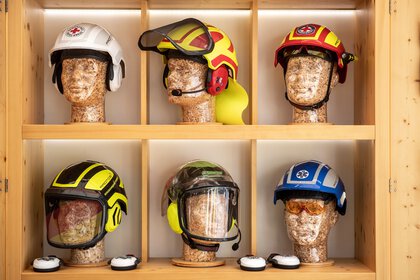
Experience occupational safety and health firsthand
To minimize the risks associated with forestry work, additional measures play a crucial role in improving safety in practice:
- Use of modern, risk-reducing technology such as harvesters, forwarders, and cable-assisted logging systems
- Regular training sessions, as well as safety and prevention briefings
- Improved tree assessment through systematic risk assessments prior to felling
- Use of virtual and extended reality for realistic simulation of hazardous situations
- Compliance with strict occupational safety regulations
You can find more information and practical tips in our special feature.
Learn moreWork vehicles, accessories, and sanitation and hygiene supplies for forestry work
Sturdy crew trailers play a key role in ensuring optimal working conditions and processes. They are used to store small tools and equipment, provide sanitary and hygiene facilities such as toilets and showers as needed, and can be equipped with wood-burning or gas stoves as well as seating. Regardless of their specific features, two criteria are paramount for crew trailers: weather resistance and burglary protection.
First Aid in the Forest, Rescue, and Emergency Calls
The fact is: no matter how careful you are or how much protective gear you wear, accidents cannot always be prevented. In such cases, prompt and competent first aid is crucial to potentially saving lives—even without emergency services on the scene. That is why first-aid courses and regular training on how to respond to emergencies should be standard practice for forestry workers. This also includes knowledge of the work environment and evacuation routes.
Equally crucial is a well-functioning rescue chain that begins with immediately calling for emergency assistance and administering first aid. Precisely because cell phone reception is often poor in forests, people rely on special communication and emergency call systems, such as the “Hilfe im Wald” app or the “nora” emergency call app. To ensure the rescue chain functions properly, at least three people should be on site during heavy forestry work, maintaining constant visual and/or auditory contact with one another. Special radios and headsets help with this.