Forest & People in Focus: Forest Careers ✓ Generational Change ✓ Skilled Labor Shortage ✓ Regional Value Creation ➤ Discover new perspectives!
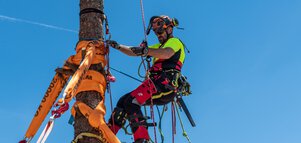


Sustainable forestry is the key to a healthy forest for the future in the face of climate change. As the leading international trade fair, INTERFORST showcases practical solutions for sustainable forest management.

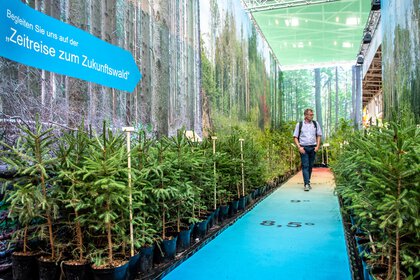
Climate change presents the forestry sector with the key challenge of preparing forests for the future. A healthy forest of the future safeguards habitats for people, animals, and plants, stores large amounts of CO², and provides wood as a renewable resource. The path to achieving this lies in sustainable forestry and the systematic conversion to climate-resilient mixed forests—forests that are vibrant, resilient, and rich in biodiversity.
Forest owners, forestry companies, and forestry service providers therefore feel more responsible than ever to preserve the important functions of the forest for future generations. As the leading international trade fair, INTERFORST presents a wide range of innovative practical solutions for future-oriented, sustainable forestry.
As a leading trade fair for the Central European region, INTERFORST offers a comprehensive overview of the market and presents innovations and trends relating to the healthy forest of the future—from forest establishment and management to wood processing.
The foundation of sustainable forest management is as simple as it is effective: no more wood is harvested than can regrow. But even after the wood is harvested, the so-called cascade use ensures that the raw material is used multiple times and remains in the cycle for a long time. In this way, the forestry and timber industry demonstrates what a true circular economy means.
A healthy forest of the future fulfills three main functions:
Sustainable forestry promotes these functions of the forest and strengthens its adaptability and resilience. The creation of mixed forests, leaving deadwood in the forest, reducing high timber stocks, and avoiding clear-cutting all serve to protect the forest and promote biodiversity. Independent certification systems such as PEFC and FSC confirm responsible stewardship of nature. Forest owners, foresters, and forestry service providers contribute to the preservation of forest functions—including for our society—through their valuable work in the forest.
With just a few clicks you can buy your personal ticket to INTERFORST or redeem a voucher.
Sustainable forest management involves long-term planning, regular monitoring of forest health, and swift action in the event of a disaster. The goal is to ensure that the forest remains a source of livelihood for future generations. Every year, numerous new forest owners and young professionals join the ranks, seeking advice and guidance regarding their forests. INTERFORST offers an excellent platform to learn about modern forest management as well as alternative sources of income, such as wind power in the forest or CO² credits.
Examples of alternative sources of income:
Wind power in forests can make a significant contribution to the energy transition while also opening up new opportunities for forest owners. At the same time, the forest must always come first. That is why wind power projects are subject to strict permitting requirements, such as
When implemented correctly, forest projects can make climate protection measurable and provide forest owners with additional income. However, this is subject to clear requirements, which
Climate change requires all stakeholders to explore new approaches to forest restructuring. Extreme weather conditions such as heat, drought, and storms, as well as pest infestations, pose a real challenge, especially for monocultures. The solution lies in stable mixed forests. Depending on the management objective, tree stand, and soil conditions, reforestation can be carried out using a wide variety of tree species through natural regeneration, seeding, or planting.
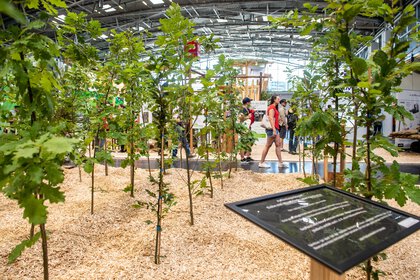
The years 2018 to 2021 in particular were marked by extreme drought and enormous forest damage, resulting in heavy losses for forest owners. Large areas of forest had to be reforested. Forest management is an active contribution to improving resilience and maintaining stable ecosystems.
In order to actively combat climate change, visitors to INTERFORST will find practical information on reforestation, climate-friendly tree species, calamity protection, and forest management.
Biodiversity plays a crucial role in the stability and resilience of forests in the face of climate change.
Characteristics of biodiversity:
This makes it a key factor for a healthy forest of the future. It is also essential for the forest to be able to provide its ecosystem services. In a healthy forest, there is the potential to receive compensation for ecosystem services, e.g., through subsidy programs or the sale of CO² credits.
Another function of a healthy forest of the future is to sequester harmful CO². To promote this, sustainable forestry encourages the development of different age classes and forest layers, thereby supporting high levels of CO² storage in the forest.
Even after logging, wood remains an important climate-friendly raw material for climate protection. Compared to fossil fuels and materials such as concrete, steel, or plastic, wood is renewable, ecologically valuable, and requires less energy to produce. Wood is used in a variety of ways as a wood product (building material, furniture, musical instruments) or as an energy source. The goal is a circular economy, meaning that wood is used as efficiently as possible through reuse and waste prevention. In cascade utilization, the valuable trunk wood is first used in the construction and furniture industries. This is followed by several recycling steps that keep the wood in use for as long as possible and ultimately lead to its use for energy. In this way, the forestry and timber industry, with its various stakeholders, embodies what other sectors strive for: it is a true circular model.
Even after harvesting, wood remains an important climate-friendly raw material for climate protection. Compared to fossil fuels and materials such as concrete, steel, or plastic, wood is renewable, ecologically valuable, and requires less energy to produce. Wood is used in a variety of ways as a wood product (building material, furniture, musical instruments) or energy source. The aim is to achieve a circular economy, i.e., to use wood as efficiently as possible by reusing it and avoiding waste. In cascade use, valuable trunk wood is first used for the construction and furniture industries. This is followed by several recycling steps that keep the wood in use for as long as possible and ultimately result in its use for energy. In this way, the forestry and timber industry, with its various players, is living what other industries are striving for: it is a true circular model.
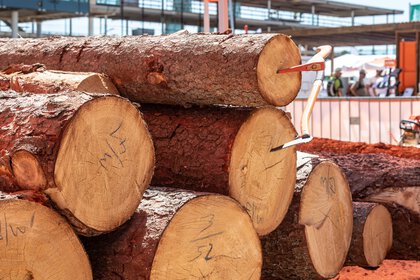
A sustainably managed forest is preserved for future generations through proper use and maintenance of all its functions. When it comes to using wood as a resource, the rule is: no more is harvested than can regrow. A fundamental principle of modern forestry
Cascade utilization describes a circular economy strategy in which wood products are kept in the system for as long as possible. Valuable timber is first used in high-quality applications (e.g., in the construction or furniture industries). After this initial use, the wood undergoes several recycling steps until, at the end of its life cycle, it is used for energy (to generate heat).
To reduce dependence on fluctuations in the timber market, there are two modern approaches worth considering:
As the leading international trade fair, INTERFORST serves as the central platform for knowledge exchange and networking within the industry. We present concrete, practical solutions to today’s challenges:
Forest & People in Focus: Forest Careers ✓ Generational Change ✓ Skilled Labor Shortage ✓ Regional Value Creation ➤ Discover new perspectives!
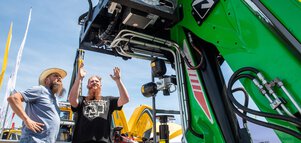
Innovative forestry technology is shaping the forest of tomorrow. Experience cutting-edge machinery, intelligent systems, and sustainable drive concepts at INTERFORST.
Digitalization in Forestry: GIS ✓ Drones ✓ Sensor Technology ✓ AI ➤ Discover Practical Solutions Now!