
The foundation of sustainable forestry: modern forest protection

Protecting the forest is one of the most important tasks of sustainable forestry. What is needed above all else? A comprehensive analysis and assessment of the entire forest stand—rather than isolated studies of individual trees or damage factors. Forest protection and silviculture go hand in hand in this regard, with the aim of identifying the causes of damage and preventing it as effectively as possible.
The stated goal of forest conservation is to preserve forested areas as habitats, economic resources, and recreational spaces—a race against time in the face of climate change. Global warming has been shown to increase the vulnerability of many tree species and forest stands and has a major impact on all flora and fauna. INTERFORST presents comprehensive solutions for the protection of forests and tree stands—whether against insect pests, wildlife browsing, fungal diseases, storm damage and windthrow, or wildfires. Intelligent monitoring and forest restructuring toward climate-resilient forests are fundamental to this effort.
By the way: The topic of forest conservation is also brought to life in our key theme, “Healthy Forests for the Future.”
Biodiversity & Species Conservation
Biodiversity in forests encompasses the diversity of ecosystems, species diversity, and genetic diversity within species. Species conservation is a key aspect of forest protection and sustainable forest management. Thanks to numerous targeted programs and environmental protection measures, species diversity in forests is on the rise again. To protect the forest, the focus is also on animal welfare as well as tree and plant protection, with the goal of achieving healthy biological diversity. How can this aspect be reconciled with the use of forests as a source of raw materials? You’ll find answers at INTERFORST.
Forest damage
Pests, such as insects and fungi, threaten forests that are often weakened by long periods of drought: the European spruce bark beetle and the spruce bark beetle, both members of the bark beetle family, infest spruce stands. Added to this are gypsy moths, oak processionary moths, and other forest pests. An excessively high game population causes damage through browsing, particularly to young trees. Last but not least, storms in the spring and fall cause widespread storm and windthrow in the stands. The greatest risk of forest fires occurs in the spring and summer months.
Digital Technologies in Forest Conservation
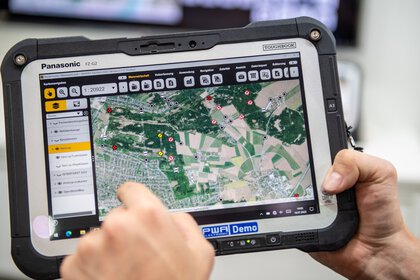
Digitalizationin forest conservation utilizes a wide range of modern technologies to precisely monitor the condition of the forest, detect damage early, and efficiently plan protective measures. Particularly relevant in this context are remote sensing and drones, LiDAR technology, sensor technology, geographic information systems (GIS), as well as digital apps and GPS. The large volumes of data are analyzed and processed by AI. For example, bark beetle monitoring provides information on their distribution, and AI-supported analyses help preserve biodiversity.
Forest Fire Monitoring and Firefighting
Forest fires can only be attributed to environmental factors to a limited extent; they are generally caused by humans, which is why protecting forests can be particularly challenging. Sometimes intentionally, but very often accidentally—through uncontrolled campfires or careless handling of cigarettes. The good news: Fire departments’ equipment for fighting and monitoring forest fires is continuously improving, becoming safer and more innovative. Large forest fires are monitored and analyzed from the air using planes, helicopters, and satellites; aerial firefighting supplements or replaces ground operations when the latter are no longer sufficient. In addition, intelligent firefighting robots are deployed when there is a risk to life and limb.
Monitoring of Pollutant Levels
Forest dieback is also caused by pollutants that enter the forest via rain or dust. Pollution levels can be measured and analyzed using various methods. These technical measurements are often supplemented by biomonitoring, which assesses pollution levels in animals and plants to draw conclusions about the overall situation in the forest. For example, plants are grown in greenhouses and then released into the environment, or plants are collected from the forest and analyzed in a laboratory.

Reforestation
Whether it involves initial afforestation or the reforestation of formerly forested areas, afforestation and natural regeneration also contribute to active forest conservation and are essential elements of sustainable forestry. The leading trade fair INTERFORST also offers detailed insights into these topics.