A healthy forest for the future thanks to sustainable forestry: reforestation ✓ tree species selection ✓ climate adaptation ✓ biodiversity ➤ learn everything you need to know about healthy forest use!

People are at the heart of a future-ready forestry sector. Discover how generational change, workforce development, and modern careers in forestry are shaping the industry—and the role INTERFORST plays.

For people, the forest is far more than a resource. It protects climate and water, provides the renewable raw material wood, and serves as both a workplace and a living environment for many. All of this highlights how closely connected forest and people truly are. Forestry professionals work every day to preserve the forest’s protective, economic, and recreational functions for future generations.
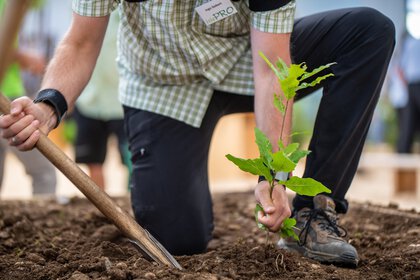
At the same time, the forestry sector faces significant challenges. Skilled labor shortages and generational change are reshaping businesses and working practices. At the same time, sustainable forest management, ongoing digital transformation in forestry, and high standards in occupational safety and health are opening new opportunities. They create meaningful and future-oriented careers in forestry—reason enough to take a closer look at the relationship between forest and people.
With more than 350 exhibitors, INTERFORST showcases this diversity. It presents the full spectrum of the forestry sector—from practical operations and research to policy, media, and associations—and provides a unique platform for learning, exchange, and gaining new perspectives.
Forestry is a key economic driver in many rural regions. It secures jobs, strengthens regional value chains, and contributes to the stability of local communities. Careers in forestry are therefore closely tied to their regions and play an important role in local economic development.
A significant part of this structure is privately owned forestland: around 48 percent of Germany’s forest area is privately owned, predominantly in small-scale holdings. Here, knowledge is often passed down directly from one generation to the next, as young people take over family operations and combine tradition with modern forest management. Forestry associations and forest owner cooperatives enable landowners to manage their forest areas more efficiently and market timber successfully through collaborative efforts.
Like many industries, the forestry sector is facing an acute skilled labor shortage. There is a lack of qualified forest workers, forestry technicians, and forestry machine operators. At the same time, public forest administrations are expected to face staffing shortages in the coming years.
The reasons are varied:
At the same time, a generational transition is taking place within state forest enterprises, among private forest owners, and in forestry companies, further intensifying the situation. Many new forest owners now live in urban areas, far from their forest properties. As a result, they often lack the practical forestry knowledge that was traditionally passed down directly from parents or grandparents in multi-generational family settings—particularly in privately owned forests. This leads to growing demand for advisory services, while qualified forestry professionals remain in short supply. New and innovative approaches are therefore needed to ensure the long-term management and care of forest resources.
To attract new professionals, the forestry sector is currently focusing on a range of measures, including:
INTERFORST provides an ideal platform where job seekers and employers can connect and engage directly.
With just a few clicks you can buy your personal ticket to INTERFORST or redeem a voucher.
To attract young professionals, the forestry sector is actively reaching out to emerging talent. Many young people today are tech-savvy and motivated by social responsibility, including climate protection, sustainability, and biodiversity. The industry is responding by aligning its training and career pathways with these interests and offering young professionals:
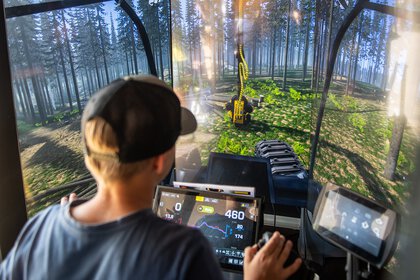
What education and degree programs are available in forestry—and what careers can they lead to? At INTERFORST, young visitors can explore a wide range of practical and informative offerings and gain valuable insights into career opportunities in forestry.
Career opportunities range from universities and professional associations to state forestry enterprises and municipal forest administrations, as well as private forestry companies.
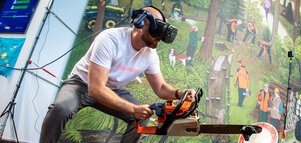
Working in the forest means exposure to changing weather conditions, difficult terrain, and unpredictable hazards such as falling trees, branches, or tension wood. However, occupational safety in forestry operations has improved significantly through the use of modern machinery, enhanced protective equipment, and comprehensive, safety-focused training programs.
Nevertheless, according to Germany’s Social Insurance for Agriculture, Forestry and Horticulture (SVLFG), more than 5,000 reportable forest-related accidents occurred in 2024. To reduce risks in forestry operations, numerous measures are implemented to enhance safety in practice:
Occupational safety plays a key role at INTERFORST. Several renowned exhibitors in the safety sector will present their latest product innovations, and the topic is also featured prominently in the conference program. A special highlight is the SVLFG special exhibition, “Shapeing forests together.” Be sure to stop by!
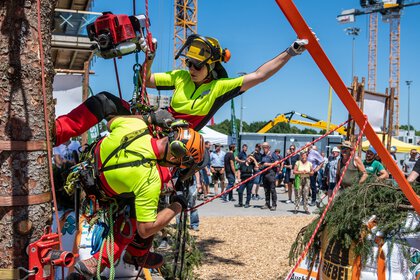
Forests produce oxygen, store water, protect the climate, and provide renewable raw materials—making them an essential foundation of life. They also create jobs, serve as an important driver of regional economies, and offer valuable recreational spaces.
The sector is currently facing a skilled labor shortage and a generational transition—both among employees and forest owners. At the same time, demands on qualified professionals are increasing, while the number of forestry service providers is declining.
The industry focuses on modernized vocational training programs and degree pathways, mentorship from experienced foresters, early career responsibility, digital technologies (such as drones, GIS, and AI), and meaningful work in climate protection, biodiversity, and sustainability.
Training institutions include state forestry enterprises, municipal forest services, universities, and private companies.
Occupational safety has improved significantly through modern machinery, enhanced protective equipment, mechanized processes, systematic hazard assessments, VR/XR simulations, and strict safety regulations. Nevertheless, many reportable accidents still occur each year, making prevention and ongoing training essential priorities.
Family-owned forest operations combine tradition with modern forestry practices. Knowledge is passed down from experienced generations to younger ones, who take over responsibility and shape the future of forest management.
More than 1,700 forestry associations in Germany bring together private forest owners. They coordinate forest management, jointly market timber, build infrastructure such as forest roads, and use machinery efficiently. This collaboration allows forest owners to share knowledge and avoid working in isolation.
Forestry jobs are often deeply rooted in rural communities and support local economies. They help sustain regional infrastructure—including schools, childcare facilities, and healthcare services—while providing young people with long-term career opportunities close to home.
At INTERFORST, more than 350 exhibitors showcase the full range of professions and services along the forestry and wood value chain. Visitors can explore career opportunities, discover potential employers, and attend conference sessions on topics such as occupational safety, talent recruitment, and sustainable forestry.
A healthy forest for the future thanks to sustainable forestry: reforestation ✓ tree species selection ✓ climate adaptation ✓ biodiversity ➤ learn everything you need to know about healthy forest use!
Innovative forestry technology is shaping the forest of tomorrow. Experience cutting-edge machinery, intelligent systems, and sustainable drive concepts at INTERFORST.
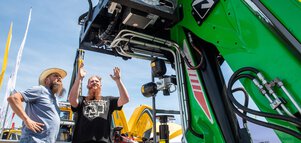
Digitalization in Forestry: GIS ✓ Drones ✓ Sensor Technology ✓ AI ➤ Discover Practical Solutions Now!