A healthy forest for the future thanks to sustainable forestry: reforestation ✓ tree species selection ✓ climate adaptation ✓ biodiversity ➤ learn everything you need to know about healthy forest use!


Innovative forestry technology is shaping the forest of tomorrow. Experience cutting-edge machinery, intelligent systems, and sustainable drive concepts at INTERFORST.

Modern forestry technology is far more than powerful machinery—it is a key driver of innovation for sustainable, future-ready forest management. It supports forest owners, foresters, and forestry companies across the entire value chain: from precise planning and timber harvesting to forest management, storage, and processing. The result is increased efficiency, lower costs, maximum workplace safety, and responsible stewardship of soil and forest stands.
Especially in the face of climate change, modern forestry technology is becoming increasingly important. Proven solutions alone are no longer enough. Innovative, forward-looking technologies are needed to make forests climate-resilient and economically sustainable. This is exactly where modern forestry technology comes into play. Autonomous and semi-autonomous machine systems, high-precision concepts for targeted interventions, health and vital-sign monitoring systems to protect workers, and connected “smart machines” are opening new dimensions in efficiency, transparency, and sustainability. Digital controls, real-time data, and intelligent assistance systems enable informed decisions—fast, precise, and resource-efficient.
Forestry technology is thus becoming the key to a resilient forest of tomorrow: economically strong, environmentally responsible, and technologically advanced. At INTERFORST, you will find the latest developments, trends, and innovations in forestry technology.
Technology and machinery have evolved dramatically in recent years. The overarching goal of this development is to make machine systems and tools more efficient, resource-saving, safer, and more ergonomic. In forest operations, safety clothing with integrated vital sensors, connected work management systems, and intelligent assistance systems to reduce physical strain are increasingly being used.
Examples of advanced AI and sensor applications in forestry technology include:
Camera systems combined with AI detect obstacles or people in the blind spots of machines such as harvesters and forwarders. This enhances safety by warning the operator or triggering an automatic stop in critical situations.
Sensors monitor machine tilt and analyze stability in real time based on terrain conditions and load. AI algorithms calculate rollover risks to provide early warnings in rough terrain and prevent accidents.
AI systems, such as those developed by Nordic Forestry Automation, assist harvester operators in selecting trees. This improves focus, efficiency, and operational safety.
Sensors monitor critical machine parameters such as pressure, temperature, and vibration in hydraulic systems, cranes, and engines. Potential component failures can be detected early, allowing preventive maintenance before breakdowns or hazardous situations occur.
Robots and small autonomous machines perform tasks such as forwarding operations or log sorting in difficult and hazardous terrain. Operating independently from human workers, they significantly reduce accident risks.
In addition to functional improvements, sustainability plays a central role in technological development. Machines are designed with soil protection, water conservation, and efficient fuel use in mind. As a result, forestry technology is becoming not only more powerful but also more environmentally responsible.
Examples of sustainable forestry technology in practice:
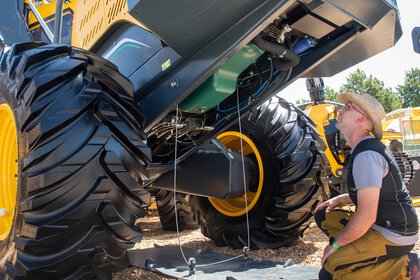
Wide tires and bogie axles distribute weight evenly and reduce ground pressure, preventing soil compaction and protecting root systems.
These machines offer high maneuverability, allowing them to operate in narrow skid trails without damaging the remaining stand.
In steep terrain, cable systems transport timber suspended above the ground, minimizing soil disturbance.
Hybrid, fully electric, and other renewable energy-based systems are increasingly being developed and implemented.
As conventional machines reach their physical performance limits, additional potential is unlocked through digitalization. Modern sensors, comprehensive data management, and improved human-machine interaction are redefining forestry technology. AI-supported applications enable digital inventory management, real-time monitoring, and predictive modeling—creating entirely new decision-making capabilities.
Examples of digital precision technology include:
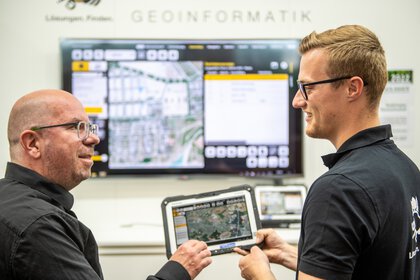
Machines use GPS technology to stay precisely on designated trails, protecting untouched forest soils from unnecessary impact.
Equipped with high-resolution cameras and LiDAR sensors, drones create detailed forest maps that capture tree density, timber volume, and forest health—enabling more efficient and targeted forest management.
Computer-assisted measurement systems in harvesters optimize cutting processes in real time to maximize value recovery and minimize waste.
Digitalization is the key enabler for semi-autonomous and autonomous machines as well as robotics in modern forestry technology.
Processes across the entire production chain are being restructured, automated, and data-driven. For more details on digitalization, see our key topic article “Digitalization in Forestry & Timber.”
With the new exhibition area SYSTEMS & COMPONENTS Forestry by DLG, INTERFORST 2026 is expanding its portfolio in cooperation with the DLG (German Agricultural Society) to include a dedicated section focused entirely on technical components and complete systems for the forestry sector.
This new area will serve as the home base for OEM engineers, designers, developers, and procurement managers. As a B2B marketplace and hub for professional exchange, it will showcase and discuss the latest solutions and innovations from the supplier industry.
More informationModern forestry technology enables the efficient and sustainable production of wood energy. Specialized machines harvest, process, and transport residual wood, thinning material, and low-grade timber for energy use. Equipment includes harvesters with energy-wood heads, chipper harvesters, mobile chippers, and high-capacity industrial chippers.
As a renewable resource, wood contributes to energy security and replaces fossil fuels. At the same time, modern forestry technology supports cascade use: wood is used materially for as long and as efficiently as possible before being utilized for energy at the end of its life cycle. This conserves resources, extends value creation, and optimizes carbon storage.
INTERFORST showcases how innovative forestry technology implements these processes in practice, presenting a wide range of specialized machines and systems.
Modern forestry technology includes advanced machinery, digital systems, and innovative solutions that make forest management more efficient, safer, and more sustainable. It supports planning, harvesting, forest care, and wood processing while reducing costs and improving soil and stand protection.
Through GPS-based planning, AI analysis, and sensor-supported systems, forest operations become more precise and resource-efficient. Machines are designed to reduce soil compaction, protect water resources, and lower energy consumption, helping forests become more climate-resilient and economically sustainable.
AI enhances efficiency and safety in forestry machinery. Applications include obstacle detection, intelligent rollover systems, thinning assistance, and predictive maintenance to prevent machine failures and hazardous situations.
Autonomous and semi-autonomous machines such as robots and forestry crawlers perform demanding tasks like forwarding or log sorting independently. They are especially valuable in hazardous or difficult terrain, significantly reducing accident risks while increasing productivity.
echnologies such as GPS, drones, and LiDAR enable more precise forest management. GPS ensures machines stay on designated trails, drones and LiDAR assess forest health, and smart harvesting systems optimize timber value recovery in real time.
Low-impact harvesters and forwarders with wide tires and bogie axles reduce soil pressure. Articulated tractors protect residual stands, and cable yarding systems minimize ground disturbance in steep terrain.
Hybrid, fully electric, and renewable energy-based systems reduce CO₂ emissions and fuel consumption, making forestry operations more environmentally friendly.
Specialized machines efficiently harvest and process residual timber for energy use, supporting energy security while conserving resources.
INTERFORST 2026 will showcase the latest innovations and trends in forestry technology.
A special highlight is the new exhibition area SYSTEMS & COMPONENTS Forestry by DLG. Beyond that, you’ll discover cutting-edge innovations presented by our numerous exhibitors across a wide range of
exhibition segments.
This exhibition area focuses on technical components for the forestry sector, connecting suppliers, OEMs, research institutions, and engineers to drive cross-industry innovation.
Real-time data, AI-supported systems, and connected machines enable precise control and better decision-making, reducing accidents and increasing operational efficiency.
A healthy forest for the future thanks to sustainable forestry: reforestation ✓ tree species selection ✓ climate adaptation ✓ biodiversity ➤ learn everything you need to know about healthy forest use!
Forest & People in Focus: Forest Careers ✓ Generational Change ✓ Skilled Labor Shortage ✓ Regional Value Creation ➤ Discover new perspectives!
Digitalization in Forestry: GIS ✓ Drones ✓ Sensor Technology ✓ AI ➤ Discover Practical Solutions Now!